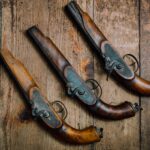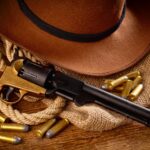
Life on the American Frontier was defined by self-reliance, mobility, and constant adaptation. Firearms were not symbols of spectacle or excess. They were practical tools used for hunting, protection, trade, and survival. Understanding how arms fit into everyday frontier life helps collectors, educators, and reenactors present this era accurately and respectfully.
This guide explores daily life in the American Frontier period, how firearms were used by ordinary people, and what these weapons represented beyond popular Western myths.
What was everyday life like on the American Frontier?
Daily life on the frontier was demanding and labor-intensive. Settlers, traders, and families lived far from established infrastructure, often relying on themselves for food, safety, and basic repairs.
Most frontier households focused on:
- Farming or ranching for subsistence
- Hunting to supplement food supplies
- Bartering goods and services
- Traveling long distances between settlements
Life conditions varied by region, but isolation and unpredictability were constant. Tools, including firearms, were valued for function rather than status.
Why were firearms essential tools in frontier life?
Firearms were practical necessities, not luxury items or constant companions. A single firearm often served multiple roles within a household.
Common uses included:
- Hunting game for food and trade
- Protecting livestock from predators
- Signaling during travel or emergencies
- Deterring threats in remote areas
Because firearms were expensive and difficult to replace, owners maintained them carefully. Ammunition was conserved, and misuse carried real consequences.
What types of arms were commonly used on the frontier?
The most common frontier firearms were simple, durable, and easy to repair.
Widely used arms included:
- Single-shot rifles for hunting accuracy
- Cap-and-ball revolvers for portability
- Lever-action rifles later in the frontier period
- Shotguns for close-range versatility
Firearms were often selected based on availability rather than preference. A person might use the same weapon for decades, passing it down through generations.
How did frontier firearms differ from popular Western portrayals?
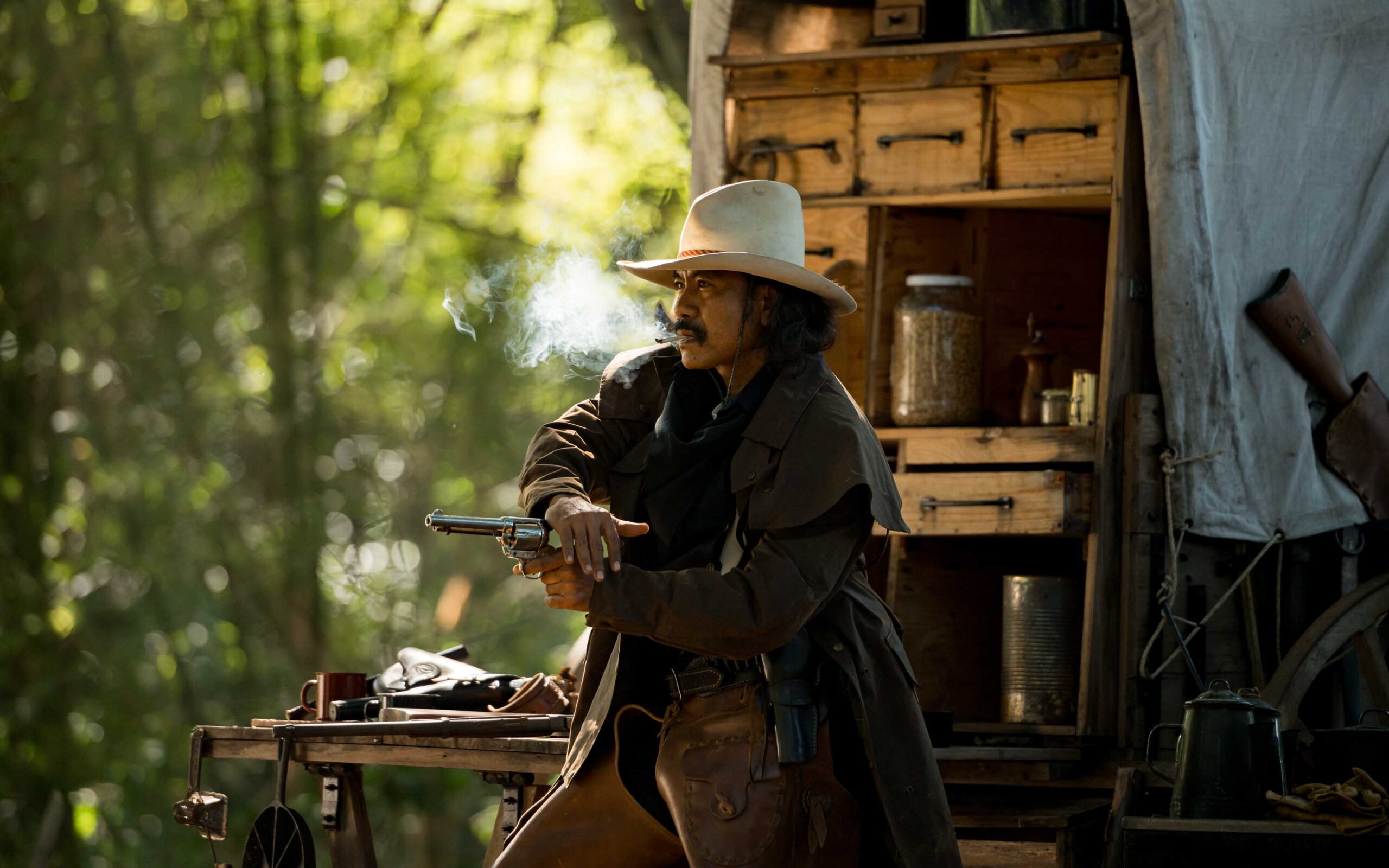
Modern portrayals often exaggerate the frequency of gunfights and daily weapon use. In reality, firearms were used sparingly and responsibly.
Key differences include:
- Gunfights were rare, not routine
- Carrying weapons openly was situational, not constant
- Firearms were tools, not fashion accessories
- Maintenance mattered more than speed or firepower
Understanding these differences helps prevent oversimplified or inaccurate representations of frontier life.
How did firearms reflect social roles on the frontier?
Firearms were shared tools within families and communities. They were not tied exclusively to any single group.
Frontier arms were used by:
- Farmers and ranchers
- Traders and travelers
- Indigenous peoples adapting traditional practices
- Women managing households and land
- Lawmen whose roles were limited and localized
Ownership reflected necessity rather than authority or identity.
How can replicas help preserve American Frontier history?
Historically accurate, non-firing replicas allow people to study and present frontier arms without risk. When used ethically, replicas support education, reenactment, and museum displays.
Retailers such as Trigger Replicas provide historically styled replicas that help illustrate how arms fit into daily frontier life while remaining safe and display-ready.
Accurate replicas help shift focus from myth to reality, encouraging a deeper understanding of how people actually lived.
Contact us
If you are researching American Frontier history or selecting a non-firing replica for display, reenactment, or educational use, contact us for guidance. Choosing the right replica helps ensure historical accuracy, safe handling, and respectful presentation.
Frequently Asked Questions
Were firearms owned by everyone on the American Frontier?
No. While common, firearms were not universal. Cost, access, and need varied by region and lifestyle.
Did people carry guns daily on the frontier?
Not always. Firearms were carried when traveling, hunting, or working in isolated areas, not continuously in daily domestic life.
What firearm was most common during the frontier era?
There was no single standard firearm. Single-shot rifles, revolvers, and early repeating rifles were all used depending on time period and location.
Did frontier women use firearms?
Yes. Many women used firearms for hunting, protection, and managing homesteads, especially in remote areas.
Why are non-firing replicas used to represent frontier arms today?
They allow safe, legal, and ethical display while preserving historical accuracy for education and reenactment.
Final thoughts
The American Frontier was shaped by resilience, resourcefulness, and practical decision-making. Firearms played a role, but not the exaggerated one often shown in popular culture. By understanding everyday life and arms in their true historical context, we gain a clearer and more respectful view of this formative period in American history.